
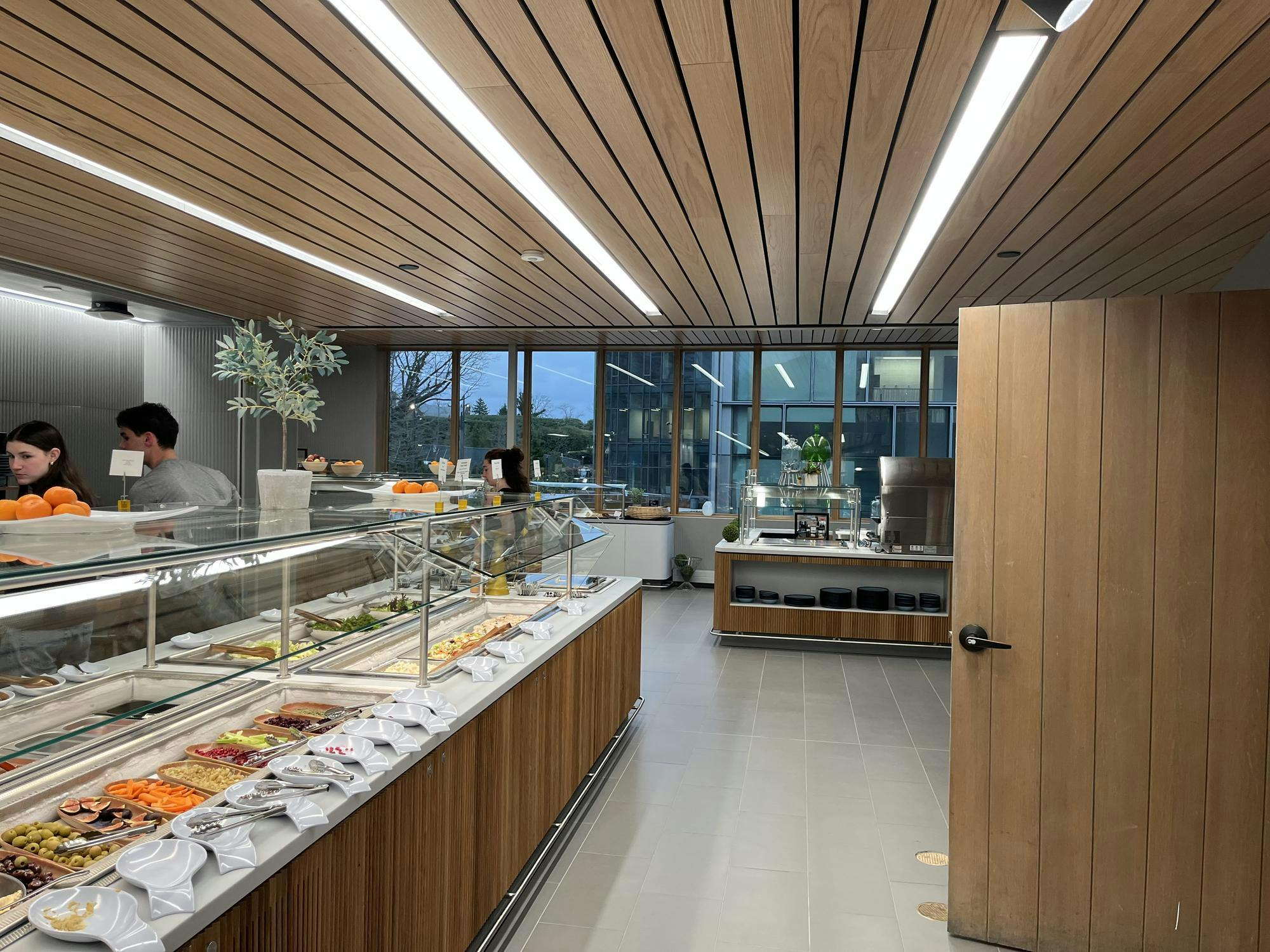
The hungry, hungry tigers at Princeton have no lack of food. Every day, each of the dining halls supplies a new set of entrees, from Whitman's famous chicken…
The hungry, hungry tigers at Princeton have no lack of food. Every day, each of the dining halls supplies a new set of entrees, from Whitman's famous chicken pot pies to meatless wings, as well as a variety of pastas and salads, for students to choose from. While this wide array of meal options is able to satisfy the appetites of many, people with dietary restrictions can't just load their plates with everything that looks good.
The Daily Princetonian spoke with students and dining hall staff to understand what dining is like when you need to check the ingredients label. Students on University meal plans have access to Princeton's four undergraduate residential dining halls as well as dining halls in the Graduate College and at the Center for Jewish Life.
Campus Wellness Dietitian Puneet Sethi wrote to the 'Prince' that the "goal is to have a variety of offerings that allow you to mix and match foods from various stations to create a plate that fits into your dietary and lifestyle needs." Sethi also emphasized Campus Dining's focus on "menu transparency and management, safe food handling, and training." But students said that their dietary restrictions make it hard to benefit from the variety of food choices Sethi referenced.
"Sometimes in the dining hall, the 'vegetarian option' is just pasta," Kylie Shulman '29, a pescatarian who eats kosher, wrote in a statement to the 'Prince.' Caroline Welty '29, a vegan, said that dining halls will often serve mushrooms, brussel sprouts, or cabbage and do not have vegan alternatives for entrees.
"It's difficult to get enough protein as a vegan when people think cabbage is a viable protein option," she said in an interview with the 'Prince.' "Oftentimes, the vegan or vegetarian entree has cheese on it," Welty said. "That's not vegan, so I don't have anything to eat except the salad bar." Welty added that she frequently has had to resort to eating raw tofu for protein.
This is a source-linked briefing. Read the original report from The Princetonian .