
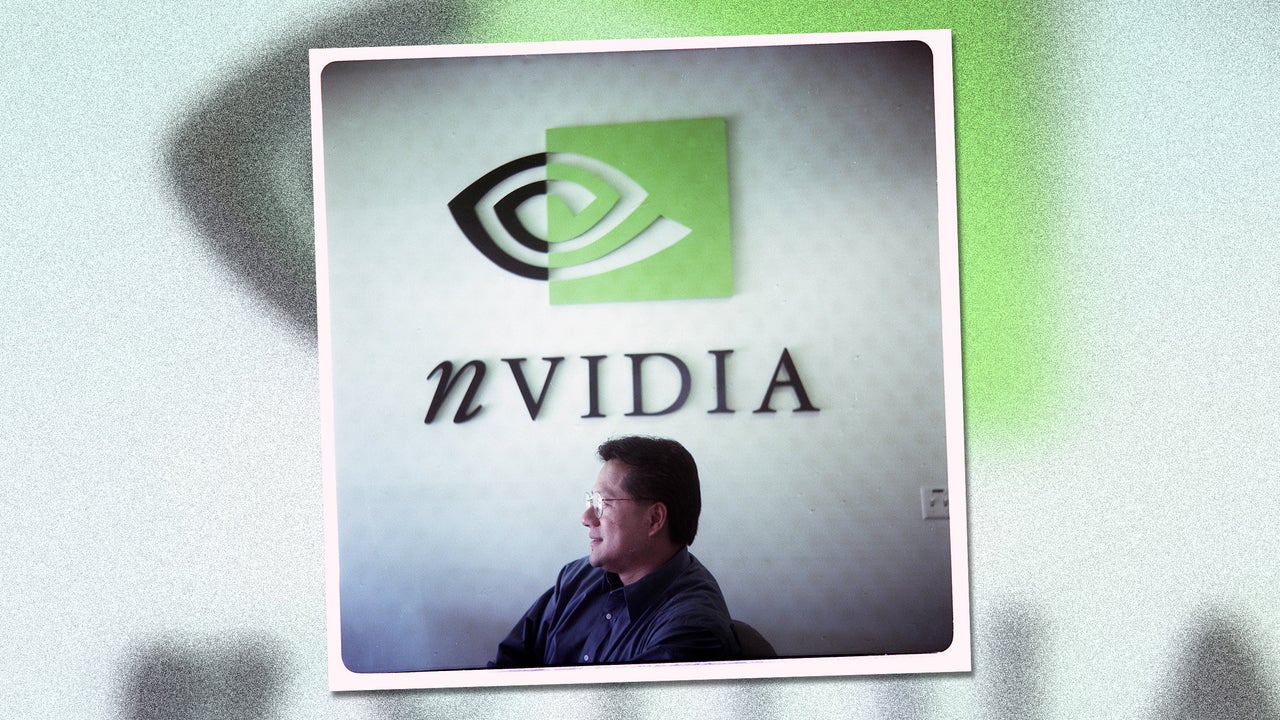
The challenge of replacing Jensen Huang, the visionary co-founder and CEO of Nvidia, who resigned yesterday morning amid reports of extramarital affairs, may be daunting—but it is far…
The challenge of replacing Jensen Huang, the visionary co-founder and CEO of Nvidia, who resigned yesterday morning amid reports of extramarital affairs, may be daunting—but it is far from unprecedented. While research shows that companies moving on from a founding CEO face a higher risk of failure or downturn than other CEO transitions, major corporations from Apple to Amazon have successfully managed the loss of a larger-than-life presence at the top of the corporate ladder.
Management experts who have studied such transitions say there are a few key lessons. Don’t look for a carbon copy of the founder When Tim Cook replaced legendary Apple founder Steve Jobs in 2011, speculation suggested he might try to replicate Jobs’ style, right down to the signature turtleneck and jeans. However, experts warned against directly replicating Jobs’ leadership and management style. “A copy of anyone is going to come off looking bad,” Wharton management professor Peter Cappelli said.
“It will never be as good as the original, and people will spend their time focusing on the differences.” Cook succeeded by building on Apple’s strengths and emphasizing his expertise as an operations specialist, scaling the sophisticated global supply chain he helped build as chief operating officer to increase annual revenue nearly fourfold. Instead of positioning himself as a visionary like his legendary predecessor, Cook maintained an understated management style and let the company’s massive financial success speak for itself.
Cook says he urged his own successor, John Ternus, to take his own individual approach. “Don’t mimic me, just like I didn’t mimic Steve,” Cook recalled telling Ternus in a recent interview with The Independent. “We all have different strengths.” Give the successor real authority—and make sure the founder lets go While research shows transitions are more successful when founders feel involved in the planning process, once they step down, it is important they keep their distance.
“The presence of two prominent leaders can confuse the organization and hinder the success of the successor CEO,” executive search firm Spencer Stuart wrote in 2024. “There can only be one CEO.” The firm recommends having explicit conversations among the founder, successor, and the board to clearly distinguish the founder’s responsibilities from those of the new chief executive. Spencer Stuart also examined 200 U.S.
This is a source-linked briefing. Read the original report from Fast Company .