
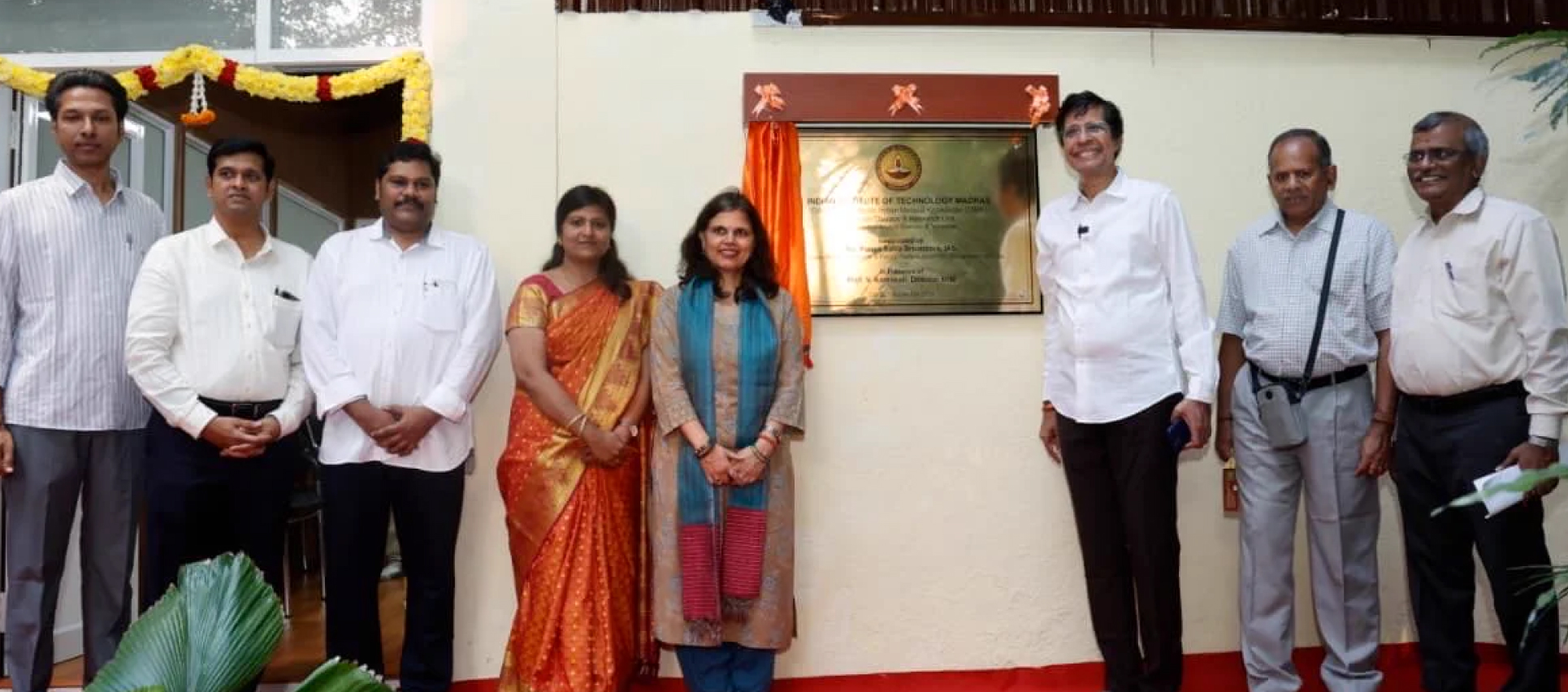
The initiatives aim to combine specialised healthcare services with interdisciplinary research and technology development, in association with Kauvery Hospitals & AIIMS Jodhpur. Union Health Secretary Punya Salila Srivastava…
The initiatives aim to combine specialised healthcare services with interdisciplinary research and technology development, in association with Kauvery Hospitals & AIIMS Jodhpur. Union Health Secretary Punya Salila Srivastava has inaugurated an Autism Lab at the Indian Institute of Technology Madras (IIT Madras) and flagged off an E-cart Ambulance service at its Institute Hospital, combining specialised healthcare services with interdisciplinary research and technology development. The initiatives also create opportunities to develop affordable healthcare technologies through collaborations between medical specialists and engineers.
The newly launched Autism Lab will focus on studying Integrated Varmam Therapy for children with Autism Spectrum Disorder (ASD), bringing traditional Indian medical knowledge into a framework of scientific investigation. The E-cart Ambulance service is designed to facilitate timely medical assistance and patient transportation across the campus, particularly for elderly people and those requiring mobility support, and to complement the institute’s existing ambulance fleet.
A Sleep Study Facility was also unveiled at the Campus Health Centre to provide specialised assessment, consultation and treatment for sleep-related disorders with support from specialists associated with Kauvery Hospitals, Chennai. It will also facilitate research into sleep patterns and different sleep disorders, subject to institutional ethics approval and informed consent. Researchers intend to explore indigenous, cost-effective sensors for sleep monitoring and analysis.
IIT Madras plans to collaborate with the Paediatric Neurology team at AIIMS Jodhpur, which has experience administering the integrated therapy to more than 800 children, to evaluate the treatment protocol. The initiative also proposes the development of indigenous pressure-sensing gloves that can provide practitioners with real-time feedback during therapy. Further research into potential genetic, molecular and epigenetic mechanisms underlying the treatment is envisaged, subject to the required ethical approvals.
The institute intends to pursue this work through activities associated with its proposed Centre for Indian Medical Knowledge. During her visit, Srivastava also reviewed research at the Sudha Gopalakrishnan Brain Centre, the Department of Medical Sciences and Technology, the National Cancer Tissue Biobank, the Healthcare Technology Innovation Centre (HTIC) and the National Centre for Assistive Health Technologies (NCAHT). These centres work across areas including high-resolution brain mapping, cancer genomics, medical devices, diagnostic technologies and assistive mobility solutions.
This is a source-linked briefing. Read the original report from Digital Health News .