
JERUSALEM — Israel’s Prime Minister Benjamin Netanyahu on Wednesday doubled down on accusations of foreign interference in last week’s election, despite calls for compromise from the nation’s president.…
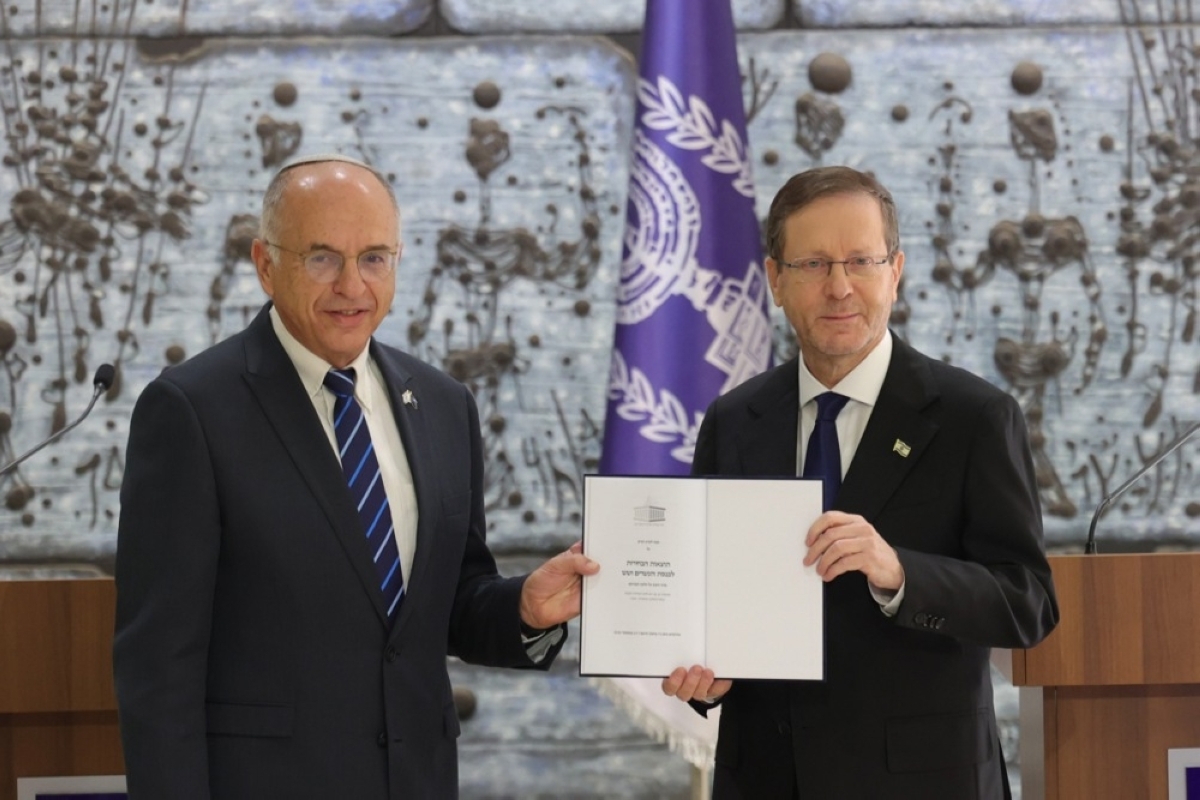
JERUSALEM — Israel’s Prime Minister Benjamin Netanyahu on Wednesday doubled down on accusations of foreign interference in last week’s election, despite calls for compromise from the nation’s president. More than a week after Israel’s first election since Hamas’ Oct. 7, 2023, attacks, President Isaac Herzog began meeting party leaders to decide whether to give Netanyahu or his rival Gadi Eisenkot the first chance to form a government in the deeply polarized country.
Eisenkot, who won the endorsement of a major Arab party, vowed to “deepen” the United States-Israel partnership across bipartisan lines and to work with President Donald Trump to stabilize the region if selected as prime minister. Netanyahu, meanwhile, pointed to “serious suspicions that foreign states have spent considerable sums to influence the outcome of the elections in Israel.” The premier has gone on the offensive against Arab-majority lists, who have the power to put Eisenkot in power if they team up.
Netanyahu has pointed to the arrests of several people with envelopes of cash on Election Day in what authorities called localized incidents, and accused leaders of accepting money from Qatar — an allegation also leveled against the prime minister’s own aides. With neither bloc holding a majority in the 120-seat parliament after the Oct. 27 vote, Herzog said both sides needed to accept that “not every commitment and promise can be fulfilled” and to avoid new elections.
“In the current reality, in which there is no clear winner after the elections, I ask for originality and creativity, courage and goodwill, so that the State of Israel emerges the winner,” Herzog said. The election saw soaring support for lists from the Arab minority, descendants of Palestinians who stayed in Israel after its 1948 creation and who have often been outraged by the harsh rhetoric and actions of Netanyahu’s hard-right government.
Without naming any leader, Herzog, whose role is usually ceremonial, said he had “great respect” for the Arab minority, which makes up around 20 percent of Israel’s population. “I condemn the coarseness and racist expressions that we have heard recently,” he said.
This is a source-linked briefing. Read the original report from The Manila Times .