
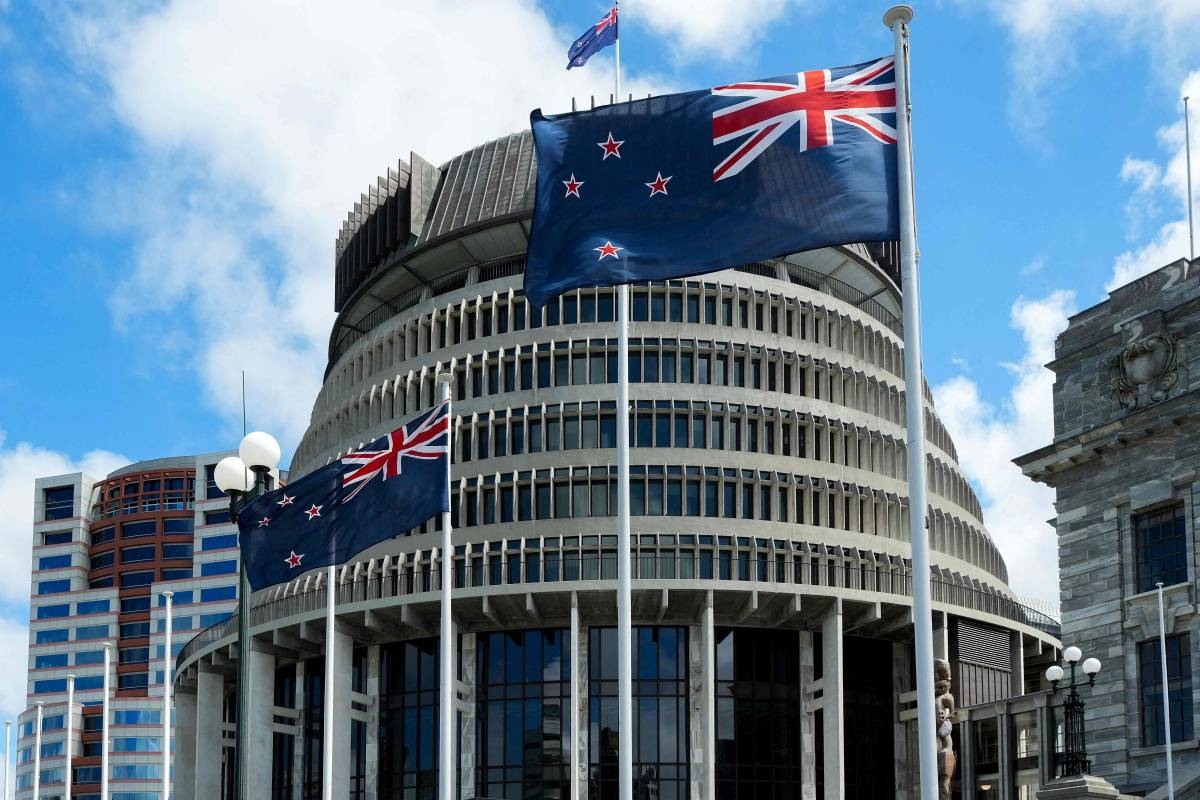
AUCKLAND — New Zealand faced the prospect Sunday of weeks or even months of political wrangling after a knife-edge election that produced no clear winner. Prime Minister Christopher…
AUCKLAND — New Zealand faced the prospect Sunday of weeks or even months of political wrangling after a knife-edge election that produced no clear winner. Prime Minister Christopher Luxon declared his right-wing coalition has a mandate to form the country’s next government — while conceding results remained too close to call definitively. Preliminary results have his National party winning the most seats, giving them a very slim majority of just two if combined with their coalition partners, the populist NZ First and the libertarian ACT.
“New Zealanders have given us the biggest seats in parliament, forty-two seats as it stands today, and a pathway to form a government,” Luxon told journalists on Sunday. “There’s no doubt about it. We’ve got a mandate.” He said his National party had done well given the war in the Middle East and subsequent global fuel shock that has been widely blamed for New Zealand’s economic difficulties.
“What we achieved, I think, was pretty good last night.” Opposition Labour Party leader Chris Hipkins has joked that while the country had spoken, “it may take us a little bit longer to figure out exactly what it is that you’ve said.” The results showed he has only a very narrow path to power for his left-wing grouping, which also includes the Green Party and the Maori party.
‘Everyone’s over politics’ Luxon will run a caretaker government until the final votes are announced on Nov. 27. “I think everyone’s over politics, so let’s all just have a bit of a break for the next three weeks,” he said. That final tally will include nearly 400,000 so-called “special votes” — among them around 100,000 votes cast overseas and by people within New Zealand but outside the local electorate in which they live.
Historically, special votes leaned left, potentially giving the Labour or Green parties an additional one or two seats at the expense of the right-bloc. This week’s knife-edge poll drew intense attention to the country’s minor parties, in particular the upstart centrist Opportunity Party. Under the country’s mixed-member proportional representation (MMP) system, voters must tick two options — a general party list as well as an individual member to represent their electorate.
This is a source-linked briefing. Read the original report from The Manila Times .