
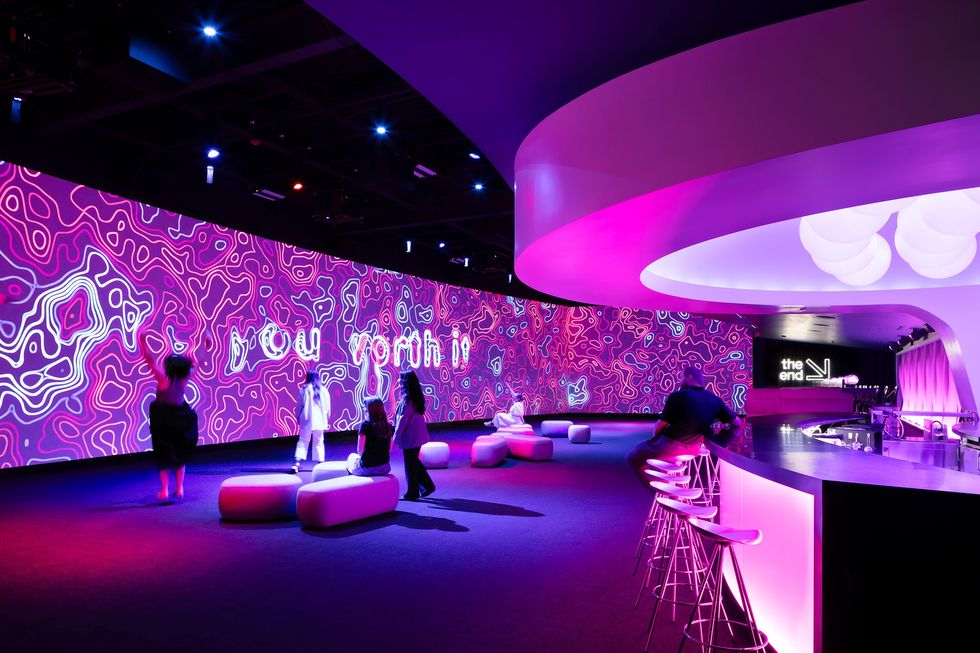
Prototype: The Experimental Museum is a first-of-its-kind cultural laboratory dedicated to exploring the intersection of art, technology, and design. Opened in downtown Columbus in 2025, Prototype functions both…
Prototype: The Experimental Museum is a first-of-its-kind cultural laboratory dedicated to exploring the intersection of art, technology, and design. Opened in downtown Columbus in 2025, Prototype functions both as a public visitor attraction and as a living research platform that informs the development of large-scale museum experiences worldwide. Rather than presenting finished works within fixed galleries, Prototype exhibits are designed as experiments, built to be tested with audiences, refined through insight, and reimagined for the next iteration.
The result is a museum that feels closer to an immersive production stage rather than a traditional gallery, where the aesthetic language of the space supports constant change while highlighting the supersensory power of the exhibits themselves. Traditional museums and attractions often develop experiences through a lengthy process that culminates in a finished product. Prototype intentionally creates space for experimentation, iteration, and risk-taking.
It gives emerging ideas, technologies, artists, and designers a place to be experienced by real audiences, allowing the field to explore what is possible. Prototype is not only an attraction, it is an R&D platform for the future of immersive cultural experiences. The experience is intentionally multisensory. Kinetic artwork, digital worlds, immersive films, sound experiences, virtual reality, haptics, reactive lighting, and sensory illusions create multiple ways for visitors to engage. Guests might watch, listen, touch, move, experiment, or simply observe.
This variety allows immersion to happen through different senses and different levels of participation, rather than relying on a single technology or interaction. Technology is treated as a tool for creating an experience, not as the experience itself. The goal is to use technology when it can create something that would otherwise be impossible. Interactive media is integrated into the physical environment so that the visitor's actions become the focus, rather than a screen or interface.
Spatial sound, projection, VR, and other interactive technologies can respond to movement, touch, or other inputs, making the technology feel like an integrated and natural part of the environment rather than an object placed within it. 6_landing_page_v03 (2160p).mp4 - Blooloop Innovation Award - Frame.io Equally important is knowing when not to use technology. Prototype explores how physical, mechanical, tactile, analog, and digital interactions can work independently or together.
This is a source-linked briefing. Read the original report from Blooloop .