
The United States on Saturday urged against using food trade as a tool for "economic or political coercion," while acknowledging the difficulty of reaching a G20 consensus as…
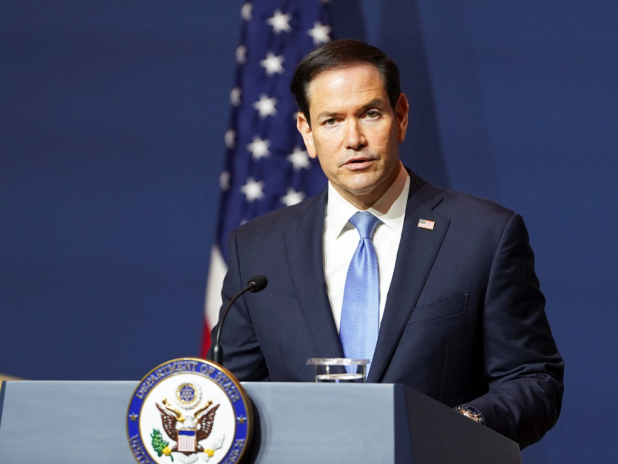
The United States on Saturday urged against using food trade as a tool for "economic or political coercion," while acknowledging the difficulty of reaching a G20 consensus as foreign ministers wrapped talks. The US comments sum up a two-day meeting in Atlanta, Georgia. "We are aligned at least in our goal and our understanding that it's a serious problem, although I cannot say we are aligned on how to solve it," said US Secretary of State Marco Rubio, who hosted the gathering.
He referred to the rise of food security problems as a result of energy, fertiliser and agricultural products being unable to reach their destinations as sea lanes come under attack. This comes against the backdrop of the Russia-Ukraine war and follows Iran's retaliation for US and Israeli strikes earlier this year.
"It is important the global community agree that trade in food and agricultural products should not be used as a tool for economic or political coercion," said a chair statement released on Saturday by the US G20 presidency. The talks among the Group of 20 major economies — which includes China, France, Germany, India, Japan and Russia — also took place days before US midterm elections, in which high energy prices are a key voter concern.
It is the last high-level meeting before a G20 leaders' summit in Miami at President Donald Trump's Doral resort in mid-December. G20 partners now have "some universal acknowledgement" that issues like freedom of navigation matter, alongside supply chains for critical minerals and food security, Rubio told reporters on Saturday. But he conceded that solving these problems will require work. The US chair statement also stressed the need for "secure, resilient, and uninterrupted energy flows, including safe navigation" through waterways.
World energy prices have rocketed since Tehran blocked the Strait of Hormuz — a key waterway for oil transit — in retaliation against US-Israel strikes. While the potential for further escalation in the Middle East continues to loom, Rubio told a press conference that Trump "hasn't made a decision" on fresh strikes. (AFP) Edited by Tony Sabine
This is a source-linked briefing. Read the original report from 香港電台新聞網 - Rthk .