
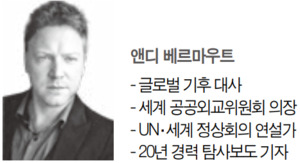
Andy Vermaut is the Global Climate Ambassador and a leading voice in global diplomacy and human rights advocacy. As President of the World Council for Public Diplomacy, European…
Andy Vermaut is the Global Climate Ambassador and a leading voice in global diplomacy and human rights advocacy. As President of the World Council for Public Diplomacy, European Community House, and Fundamental Rights Movement (Postversa), he has exposed human rights abuses from Sudan to Iran. With over 20 years as an award-winning investigative journalist, he has uncovered systemic failures through data-driven storytelling. A sought-after keynote speaker at the UN and global summits, he bridges climate urgency with human rights accountability.
Guided by his conviction that “Climate crimes are human rights violations,” Vermaut reframes ecological crises as legal imperatives, calling for reparations for the most vulnerable. ⓒ천지일보 2026.07.27. An airline passenger may spend weeks planning a journey, perhaps for business, a family reunion, medical treatment or an important personal occasion. A modern flight appears routine until an unexpected security warning changes everything.
Suddenly the aircraft may have to divert, the cabin crew must follow emergency procedures, armed security personnel may be waiting on the ground and passengers may be required to leave their belongings for inspection. During the first week of November 2026, such scenes unfolded repeatedly across Europe. Bomb threats affected flights operated by several major and low-cost airlines. Authorities responded with aircraft inspections, unusual landings and, in some incidents, military escorts.
As of 6 November, public reports indicate that inspections had not found explosives in the cases described. The absence of a bomb does not mean the threats were harmless: the consequences for passengers, aircrews and the wider aviation system were real. The incidents that put Europe on alert The threats emerged across several days, rather than as a single airport emergency. On 2 November, a Wizz Air flight traveling from London to Sofia was diverted to Budapest following a warning, and a Hungarian fighter aircraft escorted it.
On 3 November, flights involving Ryanair, Scandinavian Airlines, LOT Polish Airlines and Wizz Air were subjected to searches or diversions. A Manchester-to-Murcia flight triggered security measures in Spain. Other aircraft were examined in Italy, Poland and Bulgaria. On 5 November, the disruptions widened. An Aer Lingus aircraft traveling from Dublin to Rome was diverted to the French military airfield at Évreux; the 151 passengers and six crew members were moved to safety while security specialists inspected the aircraft.
This is a source-linked briefing. Read the original report from Newscj .