
In terms of throwbacks, returning to the legend of Faust is going quite far back in time. Based on the historical and alleged heretic Johann Georg Faust, who…
In terms of throwbacks, returning to the legend of Faust is going quite far back in time. Based on the historical and alleged heretic Johann Georg Faust, who lived during the 16th century, this particular tale of a man who makes a deal with the devil soon entered the realm of folk tales. Literary adaptations such as Christopher Marlowe's play The Tragical History of the Life and Death of Doctor Faustus or Thomas Mann's novel Doctor Faustus have since practically canonized the story.
Faust has found immortality in the opera through Charles Gounod, in symphonies such as Liszt's work, the ballet as in Abraxas, and is even reflected within the likes of The Little Mermaid. Cinema is one of the younger art forms, and almost since its inception it has compulsively drawn on Faust. The earliest of cinematic pioneers, from George Méliès to Alice Guy-Blaché, had already taken cracks at adapting Faust within the first couple decades of the medium's introduction.
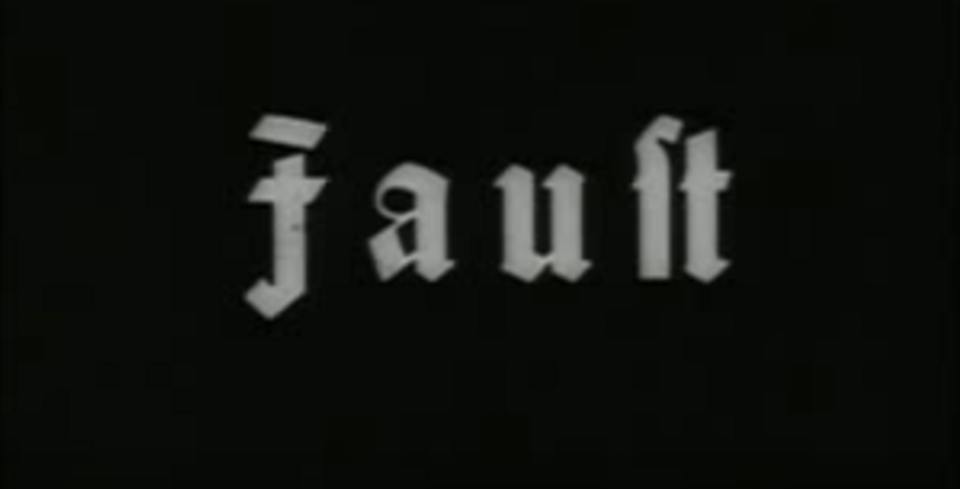
Yet much as Goethe's Faust towers over the rest as the standard all Faustian literature must reckon with, 1926 brought to bear what is widely considered the canonical cinematic adaptation of the legend. One century ago, F. W. Murnau's Faust (1926) arrived in theatres.
Drawing on both Goethe's adaptation (although it only really adapts Part 1, foregoing the sheer insanity of Part 2) and traditional folk versions of the story, the movie depicts Mephisto striving to win his contest with heaven by corrupting the soul of the famed alchemist Faust. Mephisto strikes his town with a plague, prompting a helpless Faust to summon and accept the devil's assistance in order to save his people.
Soon, Faust's kind intentions are distorted by his vanity, as he grows desirous of his lost youth and lustful towards women. His debauchery is interrupted when he falls in love with the kind-hearted Gretchen, though his dalliance with the devil remains ever-prepared to snatch away what happiness he might be able to find. Fortunately for Faust and Gretchen, Mephisto's own failings as a cruel and loveless trickster may yet cost him the ultimate war for Faust's soul.
This is a source-linked briefing. Read the original report from Johns Hopkins University .