
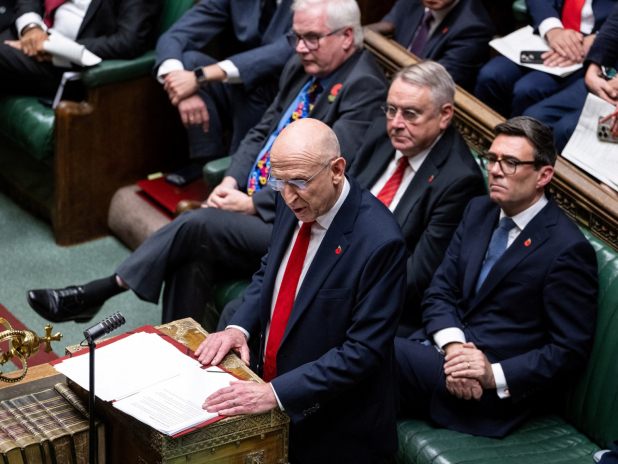
Britain's Labour government will increase a tax on profits earned by banks to help reduce soaring energy bills for millions of UK households, finance minister John Healey announced…
Britain's Labour government will increase a tax on profits earned by banks to help reduce soaring energy bills for millions of UK households, finance minister John Healey announced in his budget on Wednesday. The first budget of Prime Minister Andy Burnham's administration was delivered to parliament against a harsh global backdrop of rising inflation and borrowing costs, and the fallout of the Iran war.
Despite the constraints, Healey pledged to raise UK defence spending to three percent of gross domestic product by 2030 – a commitment he had pushed for before resigning as defence secretary over insufficient military funding under previous PM Keir Starmer. Britain's economy will grow slightly faster than forecast this year – by 1.2 percent – before slowing to a worse-than-expected 1.0 percent in 2027 – driven by effects of the war in the Middle East, Healey said as he delivered the government's annual budget.
"Fiscal discipline is my first commitment," he added, in comments welcomed by bond markets as UK yields dipped Wednesday. Healey, whose official title is Chancellor of the Exchequer, promised "immediate" support for households and businesses in the face of "global economic storms". Labour is to double to six percent a surcharge on profits earned by banks operating in the UK. Lasting for 15 months from January, the tax increase will raise £1.5 billion, Britain's fiscal watchdog, the Office for Budget Responsibility, said in an accompanying statement.
"This is net of an estimated £190 million reduction in receipts as some banks are assumed to move profits out of the UK in response to the higher tax rate," the OBR said. Banks had expected to be hit harder, resulting in share prices of most UK lenders, including Barclays and NatWest, rising. Oil and gas giants operating in the UK, which are enjoying bumper profits thanks to the US-Iran war, are already subject to a windfall tax.
Healey said a direct payment of £100 will be sent to 20 million households, as gas and electricity prices surge in large part owing to the Middle East conflict. Further measures to lower energy bills included removing fixed fees on gas bills and extending a freeze on fuel duty. Healey's budget plans were constrained by his commitment to abide by predecessor Rachel Reeves's fiscal rules, stating that day-to-day outlay must balance with state tax receipts.
This is a source-linked briefing. Read the original report from 香港電台新聞網 - Rthk .