
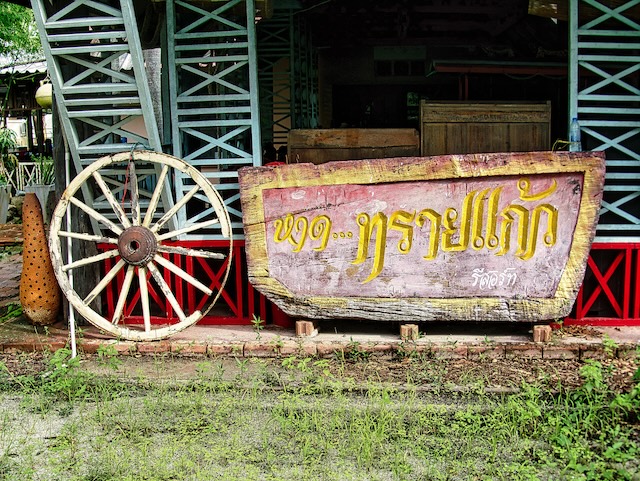
There is a particular kind of museum that does not announce itself with grand architecture or state-of-the-art lighting. It waits quietly by the sea, in a modest one-storey…
There is a particular kind of museum that does not announce itself with grand architecture or state-of-the-art lighting. It waits quietly by the sea, in a modest one-storey building that was once a family home, and it tells a story so deeply personal that it becomes universal. This is the Hat Sai Kaew Museum—a place that exists because one woman could not bear to let the past be thrown away.
During our recent media trip to Nakhon Si Thammarat to compile a guide for the Tourist Authority of Thailand, we found ourselves on the sands of Hat Sai Kaew beach in Tha Sala district. The museum sits within the grounds of the Hat Sai Kaew Resort, steps from the water, unassuming but filled with over ten thousand objects that span centuries of trade, devotion, and daily life. The Collector Behind the Collection To understand the museum, you must first understand Yerm Ruangdit.
The former village head of Ban Thakuen, now in her late sixties, is a woman whose life story reads like a testament to resilience. The eldest of nine children, she grew up poor, selling food on the streets, hawking goods at flea markets, and even working as an inter-provincial bus conductor to help support her parents. That early struggle gave her what she calls a sharp eye for opportunity—and a profound appreciation for things others discarded.
Her collecting began more than forty years ago, when she dropped out of school to sell food for a living. She would stumble upon objects people had thrown away: monk’s robes, old European irons, rusty rifles, broken lamps. She took them all. “I take in everything,” she told a reporter from the Bangkok Post, “and it’s been a habit of mine since I was little.” What began as a childhood habit became a lifelong mission.
She bought chinaware salvaged from sunken Chinese junks by local fishermen, often bartering with rice and chicken for ceramic bowls and plates . She sold land to buy expensive pieces. “Some people think I’m mad,” she admitted. But she takes pride in preserving fragments of history that would otherwise be lost. A Collection That Spans Millennia The museum’s holdings are astonishing in their breadth, even if the display space is modest.
This is a source-linked briefing. Read the original report from Asian Itinerary .